This FIFINE AmpliGame AM8 review looks at a dynamic USB/XLR microphone aimed at gaming, streaming, podcasting, and home recording.
Its desktop controls and configurable RGB make it a natural fit for creators who want practical USB features alongside an upgrade path to XLR.
AmpliGame AM8 Review Summary
The quick verdict
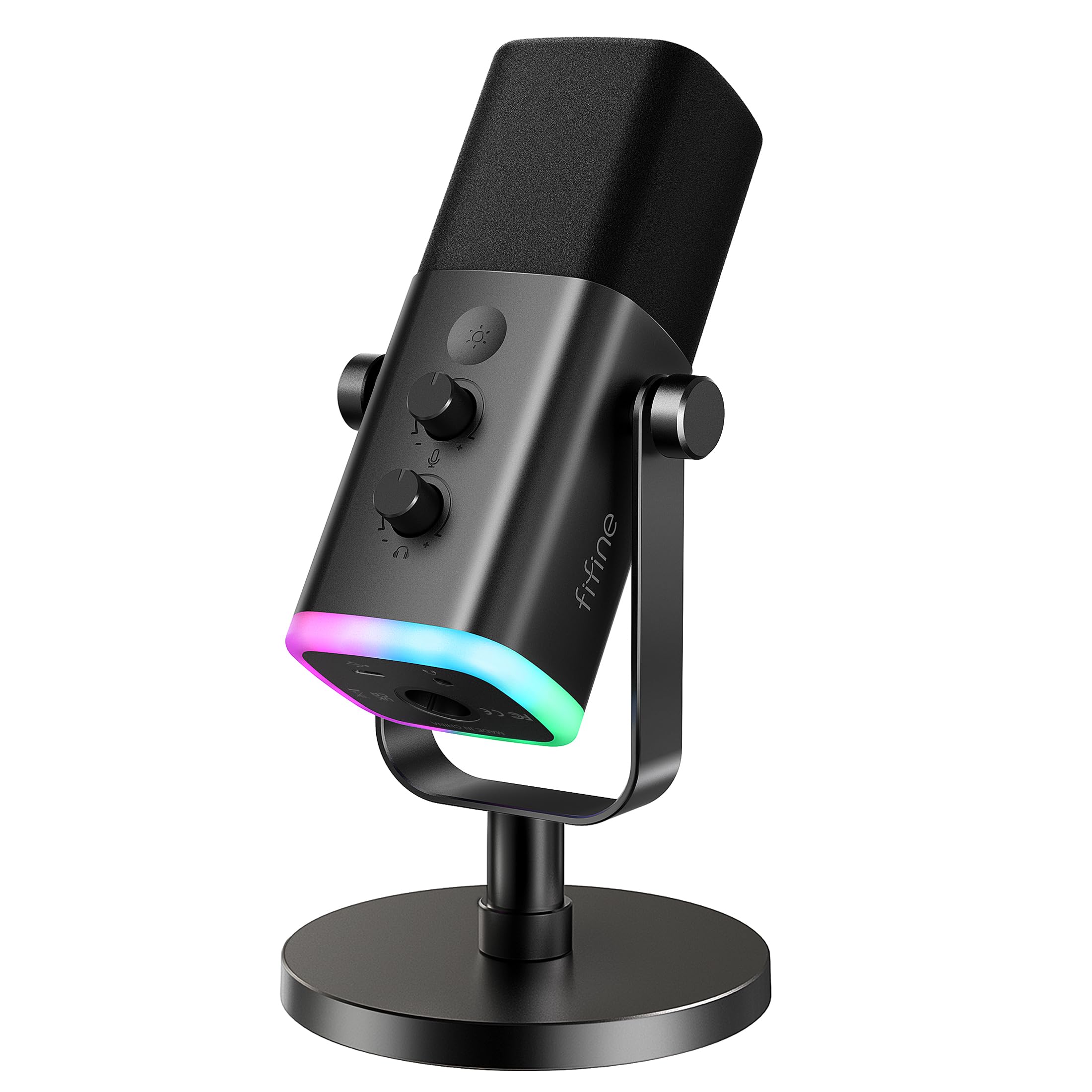
11,000+ ratings
Read Amazon ReviewsFIFINE AmpliGame AM8
A USB/XLR dynamic microphone for creators who want desktop controls and customizable lighting, with XLR setup requiring a separate cable.
- Dynamic cardioid microphone with a stated frequency response of 50Hz–16KHz.
- USB connection is intended for direct plug-in use, with tap-to-mute and an LED mute reminder.
- XLR connects to an audio interface or mixer with a separate XLR cable, which is not included.
- USB-only controls include headphone monitoring-volume adjustment and a mic-gain knob.

Pros
- USB and XLR connections support both a direct computer setup and an interface-based recording path.
- Tap-to-mute and an LED reminder add convenient privacy controls during live sessions.
Consider before buying
- The XLR cable is separate, so an XLR setup needs an additional cable before connecting to an interface or mixer.
- RGB and the function key are inactive over XLR, limiting those desk features to USB use.
Read the full review summary
The AM8 combines USB and XLR connections in a dynamic microphone with a cardioid pickup pattern, a tap-to-mute control, headphone monitoring, gain adjustment, and configurable RGB over USB.
That combination suits a gaming or creator desk where quick controls and visible lighting are part of the setup.
Its main appeal is flexibility: USB is presented as a direct plug-in route, while XLR allows connection to an audio interface or mixer using a separate cable.
The key compromise is that RGB and function controls are USB-only, so the desk-focused extras do not carry over to an XLR workflow.
The buying factors
AmpliGame AM8 Scorecard
Editorial scores reflect listed features and buyer fit; they are not laboratory measurements or customer ratings.
Connection flexibility
USB supports a direct computer connection, while XLR can connect through an audio interface or mixer; moving to XLR means supplying a separate cable.
USB controls
In USB use, tap-to-mute and an LED mute reminder make it easier to manage privacy, while headphone monitoring volume and mic gain controls let you adjust your audio.
Lighting customization
Three modes and more than ten light colors offer useful variety for a gaming desk, with RGB limited to USB use.
Mount compatibility
Built-in 3/8-inch and 5/8-inch threads broaden stand compatibility, although a stand is not the only possible setup to consider.
Pickup direction
The cardioid pattern is intended to prioritize sound from the front and reject off-axis noise, which suits a fixed speaking position.
Recording distance guidance
The suggested close recording range gives buyers a practical starting point for positioning, though room layout and use may affect placement.
Key Features and Specifications of AmpliGame AM8
- Dynamic cardioid microphone with a stated frequency response of 50Hz–16KHz.
- USB connection is intended for direct plug-in use, with tap-to-mute and an LED mute reminder.
- XLR connects to an audio interface or mixer with a separate XLR cable, which is not included.
- USB-only controls include headphone monitoring-volume adjustment and a mic-gain knob.
- USB RGB provides 3 modes and more than 10 light colors, with a memory function.
- Built-in 3/8’’ and 5/8’’ metal threads fit many microphone stands without an external adapter.
Pros and Cons of AmpliGame AM8
Pros
- USB and XLR connections support both a direct computer setup and an interface-based recording path.
- Tap-to-mute and an LED reminder add convenient privacy controls during live sessions.
- Headphone monitoring-volume and mic-gain controls are available on the microphone over USB.
- Configurable RGB and a memory function can help keep a consistent desk setup.
Consider before buying
- The XLR cable is separate, so an XLR setup needs an additional cable before connecting to an interface or mixer.
- RGB and the function key are inactive over XLR, limiting those desk features to USB use.
- The suggested recording position is close to the microphone, which may require a desk layout that keeps the mic within reach.
Who Should Buy AmpliGame AM8?
Good fit
Choose the AM8 if you want a desktop dynamic microphone with USB tap-to-mute, an LED reminder, adjustable mic gain, and headphone monitoring.
These controls are useful when recording or streaming from a fixed desk and changing levels during a session.
It also suits a creator who wants lighting that can be adjusted to a gaming or streaming setup.
The memory function can retain a selected RGB setup after power-off, while USB is the connection required for these lighting controls.
Consider it if you may move from a direct USB connection to an audio interface or mixer later. Plan for a separate XLR cable and be aware that RGB and function controls are unavailable in that mode.
Who should skip it
Skip it if you need RGB lighting or the microphone’s function key to remain available in an XLR-based setup; those controls are USB-only.
It is also a poor fit if you cannot position a close-address microphone near your speaking position, since the suggested recording range is short.
AmpliGame AM8: Desktop Flexibility and XLR Tradeoffs
USB for a straightforward creator desk
USB is the convenient route when you want a direct computer connection with mute control and a visible reminder.
Headphone monitoring-volume and mic-gain adjustments add local control, but these functions are limited to USB, so buyers planning to rely on an interface should assess which controls they need during sessions.
XLR adds a path to audio gear
An interface or mixer connection gives the AM8 a place in a more involved recording setup.
Buyers should budget for a separate XLR cable and decide whether the USB-only RGB and function controls matter to their workflow before switching connection modes.
Positioning and desk fit
The suggested close recording range makes placement worth planning around, particularly if desk space is tight or the microphone will share room with a keyboard and monitor.
Built-in stand threads widen mounting options, so check that the intended stand and speaking position work together.
Lighting as a setup choice
The RGB ring offers several modes and a broad color selection for creators who want their microphone to match a gaming desk.
It is a visual convenience rather than a recording feature, and it disappears from the workflow when using XLR, so prioritize the connection mode that fits your recording needs.
Alternatives to AmpliGame AM8
Multipurpose Dynamic Microphones alternative
5,000+ ratings
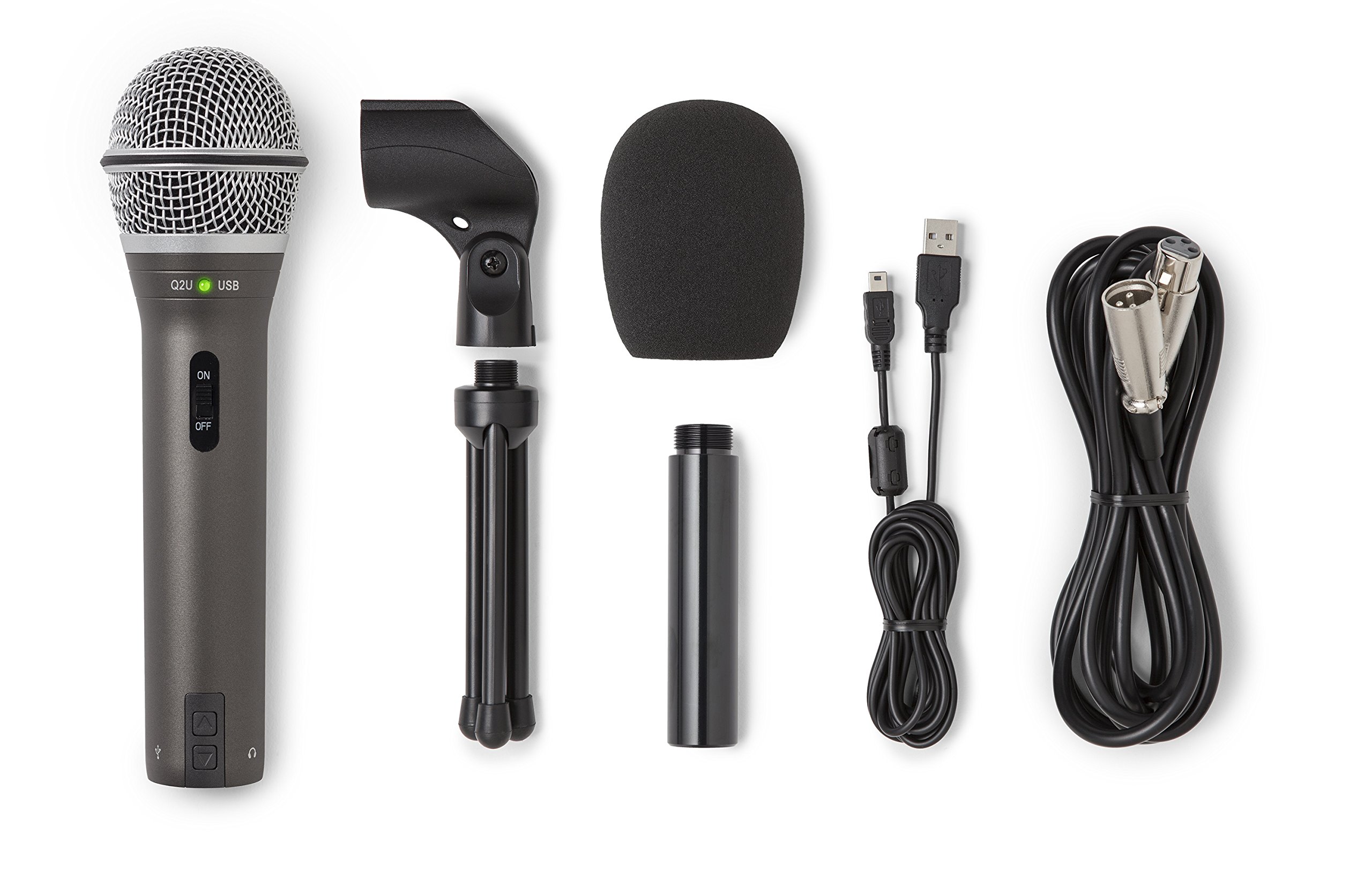
Read Amazon ReviewsSamson Q2U Dynamic USB-C/XLR Microphone
Choose the Q2U if you prefer a handheld microphone and want USB-C connectivity with both connection cables included.
Choose the AM8 if desktop RGB and USB tap-to-mute are more useful, and you are comfortable sourcing its XLR cable separately.
- The Q2U is a handheld dynamic microphone with USB-C and XLR plugs; its included accessories include a tripod stand, mic clip, windscreen, USB-C cable, and XLR cable.
- The AM8 is a desktop gaming microphone with USB tap-to-mute, RGB controls over USB, and an XLR connection that requires a separate cable.
Multipurpose Dynamic Microphones alternative
600+ ratings
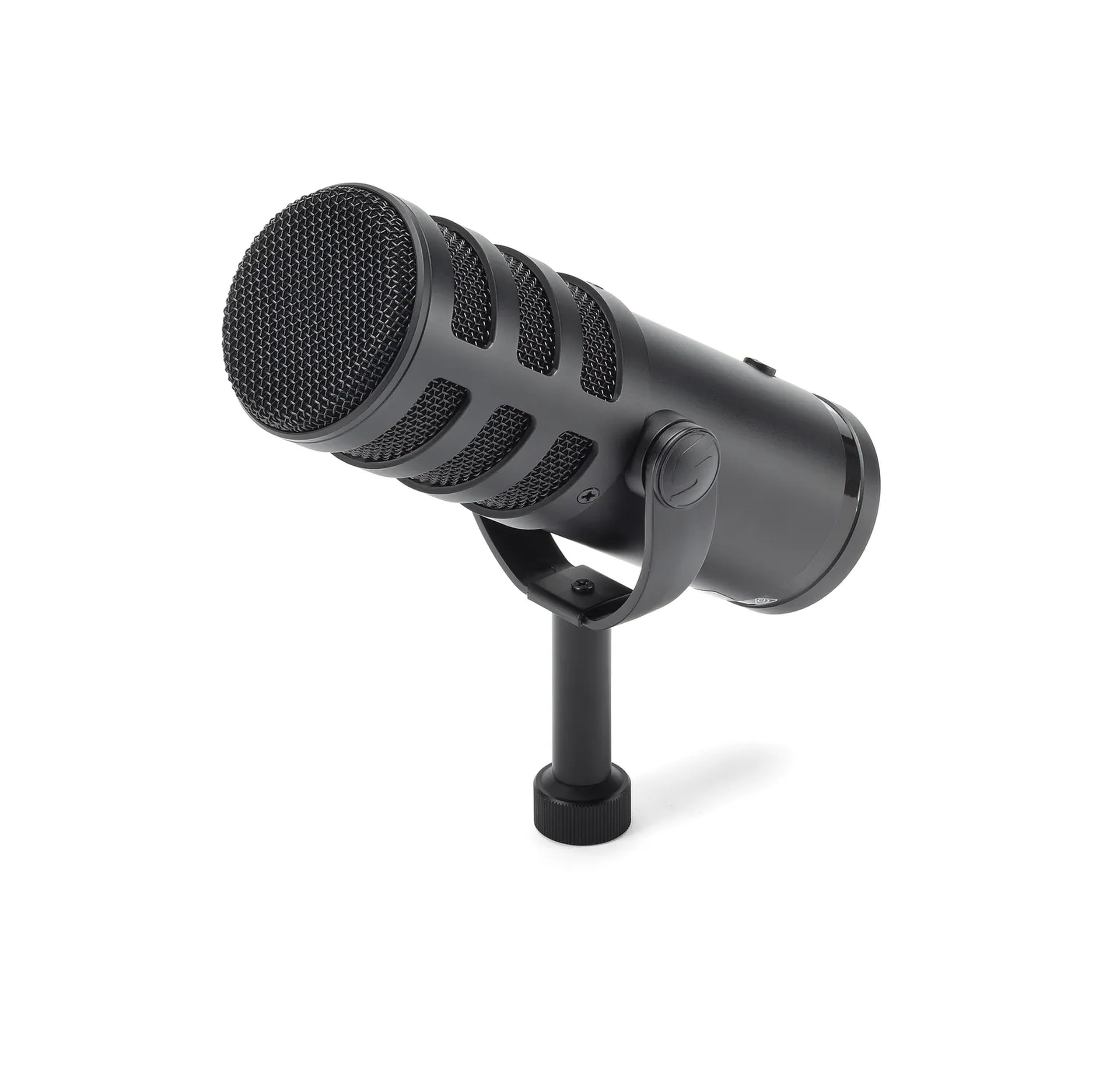
Read Amazon ReviewsSAMSON Q9U XLR/USB Dynamic Broadcast Microphone
Choose the Q9U if you want USB-C recording at 24-bit/96kHz, zero-latency headphone monitoring, and a mute switch that works across both outputs. Choose the AM8 if USB RGB and tap-to-mute on a gaming desk better match your priorities.
- The Q9U provides USB-C digital audio at 24-bit/96kHz, zero-latency headphone monitoring, and a mute switch that silences both USB and XLR outputs.
- The AM8 pairs USB tap-to-mute with configurable RGB, but those controls work only over USB; its XLR connection is an alternate route to an interface or mixer.
Is AmpliGame AM8 Worth It?
The FIFINE AmpliGame AM8 is worth considering for gaming, streaming, and home recording if you want a desk-oriented dynamic microphone with convenient USB controls, customizable RGB, and an XLR path for future equipment.
The stand threads and close-position guidance make it practical to plan around a fixed recording spot.
Buy it if USB will be your main connection and its mute, monitoring, gain, and lighting controls fit your routine.
If you plan to use XLR, factor in the separate cable and accept that the RGB and function key will be inactive; those are the central tradeoffs behind its flexible setup.
Your review at a glance
11,000+ ratings
Read Amazon ReviewsFIFINE AmpliGame AM8
A USB/XLR dynamic microphone for creators who want desktop controls and customizable lighting, with XLR setup requiring a separate cable.
- Dynamic cardioid microphone with a stated frequency response of 50Hz–16KHz.
- USB connection is intended for direct plug-in use, with tap-to-mute and an LED mute reminder.
- XLR connects to an audio interface or mixer with a separate XLR cable, which is not included.
- USB-only controls include headphone monitoring-volume adjustment and a mic-gain knob.